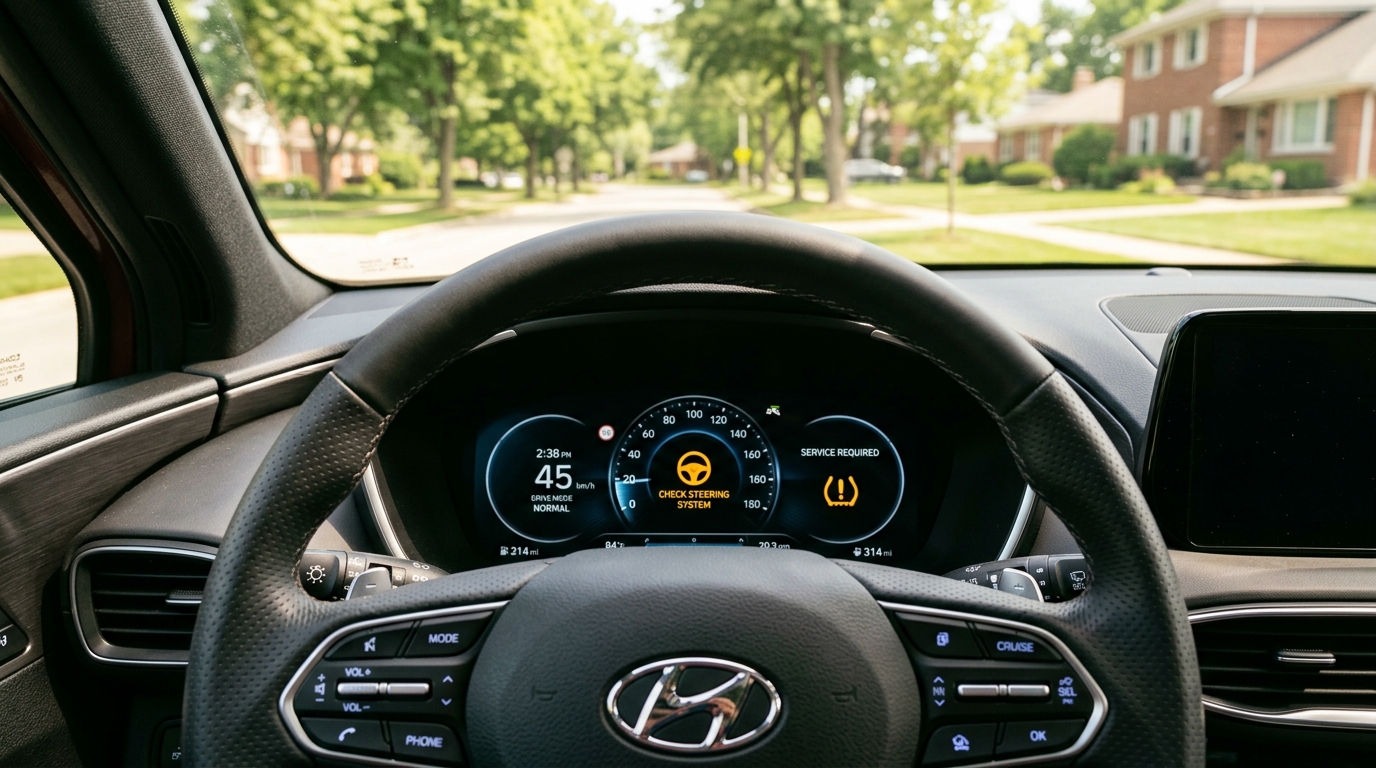
Restarting your vehicle may temporarily clear a steering assist fault if the alert was triggered by a minor software glitch or brief voltage drop during startup. However, if the underlying cause involves a failing 12-volt battery, loose wiring ground, or malfunctioning steering sensor, the fault code remains stored in the control module and the warning light will reappear while driving. Professional diagnostic scanning is necessary to identify the root issue.
When you turn off the ignition and restart the engine, the vehicle's electronic control units undergo a microprocessor reboot. This power cycle clears active temporary indicators if all system parameters return to expected operating thresholds. Modern Electric Power Steering systems depend heavily on stable system voltage. During cold morning startups or after short suburban commutes through Lincolnwood, a momentary voltage dip across high-current circuits can trigger a temporary diagnostic trouble code such as P0636. If charging voltage stabilizes after the engine runs, cycling the ignition might extinguish the steering wheel icon on your cluster.
Despite the light turning off, the initial fault event stays logged in the computer history memory. If an intermittent electrical short, a degraded ground strap, or an overheating electric steering motor caused the initial disengagement, the system will disengage again once mechanical stress or system temperatures increase. Relying on ignition cycling as a permanent fix leaves your vehicle vulnerable to sudden loss of steering assistance in heavy traffic. To ensure your vehicle remains safe and responsive, schedule an electronic system evaluation by giving our team a quick call or getting directions to our Lincolnwood service center.
Table of Contents
- How Does Your Vehicle Notify You When Steering Assist Deactivates?
- What Does the Steering Wheel Warning Light Look Like When Steering Assist Fails?
- What Are the Most Common Reasons Steering Assist Suddenly Turns Off While Driving?
- Is It Safe to Keep Driving If the Steering Assist Warning Disappears After Restarting?
- Can You Adjust Steering Wheel Vibration and Alert Settings in Your Infotainment Menu?
- Common Questions About Steering Assist Warnings and Diagnostic Procedures
- Schedule Professional Steering System Diagnostics at Berman Hyundai
How Does Your Vehicle Notify You When Steering Assist Deactivates?
Modern vehicles notify you that steering assist has deactivated using a multi-sensory combination of visual dashboard icons, cluster text messages, audible warning chimes, and haptic steering wheel vibrations. These tiered alerts notify you immediately whether active lane-centering has temporarily paused or electronic power steering assistance has failed entirely.
Driver-assistance technology differentiates between routine operational standbys and critical system faults. When driver-assist systems like Lane Keeping Assist or Lane Following Assist switch off because lane markings are faded, covered, or unreadable, the steering wheel icon on your digital instrument display typically shifts color from green to white or gray. If you remove your hands from the steering wheel for an extended period while active guidance is engaged, the vehicle initiates a structured escalation sequence:
- A visual alert appears on the center display warning you to place your hands back on the steering wheel rim.
- Repeated audible warning chimes sound through the cabin audio speakers to capture your attention.
- Haptic feedback actuators vibrate the steering wheel rim to provide tactile prompts.
- Active steering assistance disengages completely, returning total physical steering control to the driver.
If a hardware or electrical malfunction occurs within the Electric Power Steering motor or control circuit, the vehicle emits an urgent warning tone and displays clear text messages such as Steering Assist Unavailable, Power Steering Assist Fault, or Service Power Steering. These notifications inform you that motor-driven power assistance has stopped, requiring higher physical effort to steer the vehicle safely. Drivers can review vehicle safety and coverage details through the Hyundai Assurance program or reach out to our service team through our online contact portal if unexpected steering alerts appear on the dashboard.
What Does the Steering Wheel Warning Light Look Like When Steering Assist Fails?
The steering wheel warning light appears on your instrument cluster as a stylized steering wheel outline, frequently paired with an exclamation mark or the letters EPS. Depending on the severity of the system malfunction, this symbol illuminates in either amber or bright red to indicate operational status.
An amber or yellow steering warning icon indicates a non-critical fault, a temporary system limitation, or a sensor communication delay. For example, if low system voltage limits total electric power steering output or if lane-following features are temporarily suspended, the amber steering symbol remains illuminated to inform you that partial functionality is compromised. Steering effort may feel slightly heavier than normal, but the mechanical steering linkage remains fully connected to the front wheels. Connected vehicle technologies like Bluelink+ features can also log health reports and send automated diagnostic notifications regarding chassis alerts directly to your smartphone.
A red steering warning symbol indicates an urgent system fault or complete loss of motor-assisted power steering. When illuminated in red, the electric steering motor has stopped supplying rotational force, causing the steering wheel to feel exceptionally heavy during low-speed maneuvers or parking turns. If a red warning light appears alongside a battery indicator or brake warning symbol, bring the vehicle to a controlled stop in a safe area. Drivers looking for routine maintenance offers can check our current service incentives before bringing their vehicle in for an electrical system diagnosis.
What Are the Most Common Reasons Steering Assist Suddenly Turns Off While Driving?
Steering assist suddenly turns off while driving due to low system voltage, front sensor obstruction, thermal protection shutoffs in the electric steering motor, or internal communication faults between vehicle control modules. Because electric power steering motors draw heavy electrical current, even minor voltage drops cause the steering control unit to disengage assistance to protect sensitive electronic circuits.
Key factors that lead to sudden steering assist shutoffs include:
- Low Battery Voltage or Charging Instability: Electric power steering motors require high amperage during tight turns. A weak 12-volt battery or an unstable alternator drops system voltage below operational thresholds, forcing the steering module into fail-safe mode.
- Camera and Radar Sensor Obstructions: Rain, road salt, slush, or mud covering the windshield camera or front grille radar sensors causes Lane Following Assist and automated steering guidance to shut off instantly.
- Overheating Steering Motor: Repeated low-speed turns or tight parallel parking maneuvers—such as navigating densely packed commercial blocks along Devon Avenue in West Ridge—can overheat the electric power steering motor. Thermal management software temporarily reduces assistance until internal component temperatures drop.
- Steering Torque and Angle Sensor Faults: Defective torque sensors fail to measure driver turning force accurately, while mechanical suspension shifts misalign the steering-angle sensor, triggering system disengagement.
When electrical or sensor faults interrupt active steering support, factory-trained technicians at our certified Hyundai service center run full-system diagnostic scans using OEM tools to isolate high-resistance grounds, damaged wiring harnesses, or stored trouble codes.
Is It Safe to Keep Driving If the Steering Assist Warning Disappears After Restarting?
It is not safe to continue driving long-term if a steering assist warning disappears after restarting the car, because intermittent steering faults frequently recur without warning while the vehicle is in motion. A self-clearing light usually signals a transient voltage drop or pending component failure that will worsen under load.
When a power steering alert clears upon cycling the ignition, the vehicle has simply reset its active system monitor. The underlying defect—such as a corroded ground cable, an undercharging battery, a loose wiring connector, or internal module wear—remains unaddressed. If steering assistance cuts out unexpectedly while navigating sharp turns at intersection speeds or cruising on high-speed expressways, the sudden increase in manual steering resistance can make evasive maneuvering difficult.
Treating an intermittent warning icon as a resolved issue risks sudden loss of power steering at critical driving moments. Having certified technicians perform a load test on the 12-volt charging system and scan for stored history codes ensures hidden electrical issues are resolved before they cause a breakdown. If your dashboard steering light illuminated recently, get direct navigation via our dealership directions page to have your steering system thoroughly inspected.
Can You Adjust Steering Wheel Vibration and Alert Settings in Your Infotainment Menu?
You can adjust steering wheel vibration intensity and alert volumes through your vehicle’s infotainment menu under driver assistance settings. Most modern vehicle systems allow you to tailor haptic feedback force and acoustic warnings to match your personal driving preferences.
To customize steering assist feedback, navigate through your touchscreen display to Settings, select Vehicle, and open the Driver Assistance submenu. Within the Warning Intensity and Warning Volume controls, you can adjust several parameters:
- Haptic Feedback Force: Choose between High, Medium, or Low vibration intensity delivered through the steering wheel rim when lane drift is detected.
- Audible Warning Volume: Adjust or mute warning chimes associated with Lane Keeping Assist and blind-spot steering interventions.
- System Sensitivity: Toggle operational timing between Early, Medium, or Late alert triggers.
While driver-convenience alerts like lane-departure haptics can be customized or lowered, safety-critical system fault alerts cannot be disabled or muted. If steering vibration occurs outside of lane drift scenarios or is accompanied by a steering wheel light, feel free to contact our dealership team to verify proper system operation.
Common Questions About Steering Assist Warnings and Diagnostic Procedures
Q: Can a dealer service department provide a reference guide for dashboard warning lights?
Yes, our service department provides dashboard indicator reference information detailing warning icons, status colors, and recommended driver responses. Having an icon quick-reference guide in your vehicle helps you differentiate between routine system standbys and urgent mechanical faults while driving. You can also explore our Chicago Hyundai dealership site or review our Hyundai Car Care program details to learn more about routine vehicle health monitoring.
Q: Why does the steering assist icon change from green to white or gray on the instrument cluster?
A green icon indicates active steering assistance, meaning the camera system is actively tracking lane boundaries and guiding steering. A white or gray icon signifies standby mode, which occurs automatically when lane lines become unclear, vehicle speed drops below activation thresholds, or the driver turns on a turn signal to change lanes intentionally.
Q: Will a weak 12-volt battery cause electric steering alerts before failing to start the engine?
Yes, electronic power steering motors draw substantial electrical current during initial power-up self-tests. A weak or aging battery can deliver a brief voltage drop that triggers a power steering warning light even if it still retains enough charge to turn over the starter motor. Drivers can review how routine factory maintenance helps protect vehicle performance through Hyundai Complimentary Maintenance coverage.
Q: How many warning chimes sound when active lane steering assist disengages?
When driver assistance features like Lane Following Assist force an emergency disengagement due to undetected driver hands or lost road markings, the vehicle typically sounds two or three sharp warning chimes alongside visual cluster notifications to prompt immediate manual steering recovery.
Q: Does factory warranty coverage include power steering module diagnostics and repairs?
Factory warranty coverage includes electronic steering control modules, steering angle sensors, and motor-driven steering rack assemblies under the 5-year/60,000-mile bumper-to-bumper warranty and 10-year/100,000-mile powertrain warranty for eligible original owners. Customers covered under our Perfect Car Promise or seeking support through Hyundai Roadside Assistance can reach our team by giving us a quick call or getting directions to our service facility.
Schedule Professional Steering System Diagnostics at Berman Hyundai
If your vehicle displays an amber or red steering wheel light, intermittent steering vibration, or driver-assist disengagement messages, scheduling a comprehensive diagnostic check with factory-trained technicians is the safest course of action. At Berman Hyundai, our certified service team utilizes factory scan tools, precision battery load testers, and genuine OEM steering components to keep your vehicle operating smoothly and reliably on every journey. Give our service advisors a call or book your next maintenance appointment online today to ensure total peace of mind on the road.