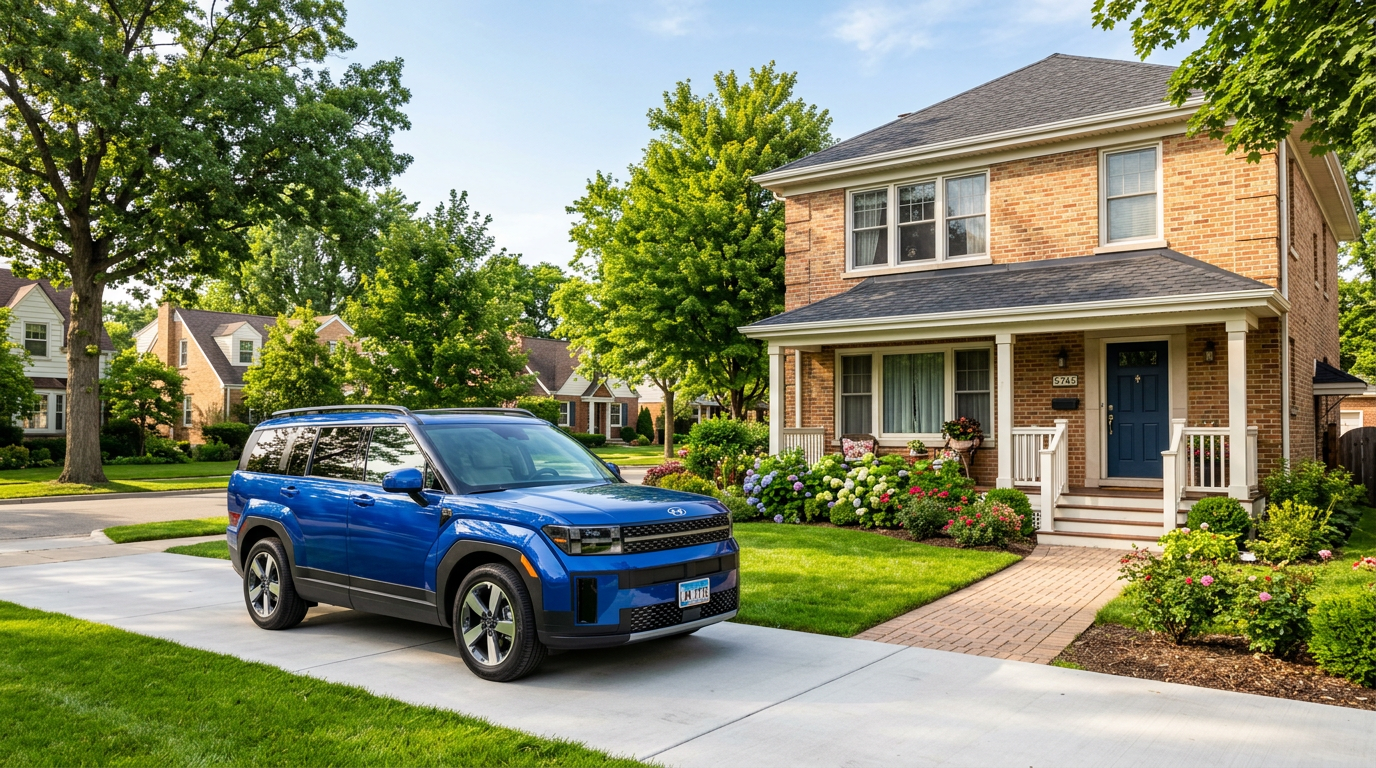
As temperatures rise across the Midwest, preparing your vehicle for long-distance summer travel is the most effective way to ensure a safe, uninterrupted journey. Extreme seasonal heat places immense stress on your vehicle's cooling system, battery, and tires. Addressing these critical maintenance areas before you pack the trunk helps prevent common roadside emergencies and keeps your vehicle operating at peak efficiency.
Our team at Berman Hyundai is committed to keeping your vehicle in prime operating condition, whether you are planning a weekend getaway or a cross-country tour. Through the comprehensive Hyundai Assurance program, owners receive structural support designed to make vehicle care straightforward and reliable. When you bring your vehicle to our factory-authorized facility, certified technicians utilize specialized diagnostic equipment to evaluate every vital system, ensuring your vehicle is fully prepared to handle sustained high temperatures.
If you are noticing a slight drop in air conditioning performance or want to verify your vehicle's road-readiness, you can easily reach our service advisors with a quick call at (847) 582-3294 to discuss your upcoming travel plans. For drivers navigating the busy corridors near Lincolnwood, dropping by for a seasonal checkup is a convenient step toward total peace of mind on the highway. You can find our exact location and plan your visit by viewing our dealership directions online.
To help our local community stay ahead of seasonal maintenance, we regularly update our service offerings. We invite you to explore our current maintenance opportunities to find seasonal specials on essential summer prep services. As your trusted authorized Hyundai service center, we prioritize using genuine OEM parts that are engineered specifically for your vehicle's powertrain. Let our experienced team at Berman Hyundai handle the technical details so you can focus on enjoying the open road.
Table of Contents
- Is a Dealer Multi-Point Inspection Worth the Cost Before a Long Trip?
- Managing Tire Pressure and Wheel Protection in the Summer Heat
- Testing Your Battery Health and Maintaining Engine Fluids
- Comparing the Hyundai Santa Fe and Kia Sorento for Long-Distance Comfort
- Planning EV Charging Routes and Understanding Trip Interruption Benefits
- Quick Answers to Common Hot Weather Service Questions
- Keep Your Hyundai Running Smoothly This Summer
Is a Dealer Multi-Point Inspection Worth the Cost Before a Long Trip?
A professional multi-point inspection is a highly recommended preventative measure before embarking on a long-distance road trip. While some drivers consider visual walk-arounds sufficient, a dealer inspection provides a systematic, deep-dive evaluation of safety-critical components that are difficult to assess at home. Experienced technicians inspect the brake pads, rotors, steering linkages, suspension bushings, and underbody components to catch minor wear before it escalates into a mechanical failure far from home.
During a professional multi-point inspection, certified technicians use specialized diagnostic tools to interface with your vehicle's onboard computers, checking for pending trouble codes that have not yet triggered a dashboard warning light. They also perform a high-pressure test of the cooling system and inspect all drive belts and coolant hoses for hairline cracks or soft spots. This level of scrutiny is particularly valuable for local drivers who regularly commute through high-traffic areas like West Ridge, where stop-and-go urban driving accelerates wear on braking and cooling components.
Investing in a dealer-level inspection also preserves the long-term reliability and value of your vehicle. By catching a small fluid leak or a worn belt early, you avoid the high costs of emergency highway towing and secondary engine damage. For detailed information on what our comprehensive multi-point inspections cover, you can learn more about our car care standards online. If you are ready to schedule your pre-trip inspection, you can easily find our service bay hours and get directions to our service department to plan your visit.
Managing Tire Pressure and Wheel Protection in the Summer Heat
Sustained summer heat causes rapid fluctuations in tire pressure that directly impact your vehicle's safety, fuel economy, and handling. For popular models like the Hyundai Elantra or the 2026 Hyundai Tucson, the manufacturer-recommended cold tire pressure is typically 33 to 35 PSI, which is clearly documented on the placard located on the driver's side door jamb. It is critical to check your tire pressure in the morning before driving, as tire pressure increases by approximately 1 PSI for every 10-degree Fahrenheit rise in ambient temperature, and driving on hot pavement adds even more pressure.
Underinflated tires running on hot asphalt generate excessive internal heat, which weakens the tire's internal structure and significantly increases the risk of a high-speed blowout. Conversely, overinflated tires reduce the contact patch with the road, leading to harsh ride quality, premature center-tread wear, and reduced traction during sudden summer downpours. Regularly checking your tires with a high-quality digital gauge ensures your vehicle maintains optimal grip and achieves its rated fuel efficiency, such as the impressive EPA-estimated 38 mpg highway delivered by the 2026 Hyundai Tucson hybrid.
In addition to maintaining proper inflation, protecting your wheels and tires from physical road hazards is a smart financial decision for frequent travelers. Summer road construction often leaves highways littered with debris, sharp metal, and uneven pavement joints. To safeguard against these unpredictable expenses, many drivers choose to invest in a manufacturer-backed tire and wheel protection plan. If you would like to discuss tire replacement options, wheel alignments, or protection plans before your next trip, please contact our service team today to speak with a specialist.
Testing Your Battery Health and Maintaining Engine Fluids
Summer heat is actually far more damaging to car batteries than winter cold, as high temperatures accelerate internal fluid evaporation and speed up chemical corrosion inside the casing. To prevent a sudden dead battery at a highway rest stop, you can perform a preliminary health check at home using a digital multimeter. With the engine turned off, a fully charged 12-volt battery should show a resting voltage of approximately 12.6V or higher; a reading of 12.2V or lower indicates a battery operating at roughly a 50% charge state that requires professional testing or replacement.
Maintaining the proper level and quality of vital engine fluids is equally critical to preventing severe powertrain damage during hot weather travel. For owners of the 2026 Hyundai Tucson, checking and topping off fluids is a straightforward process that should be done on a flat, level surface with a cool engine:
- Engine Oil: Pull the dipstick, wipe it clean, reinsert it fully, and pull it out again to verify the oil level is between the "L" (Low) and "F" (Full) marks.
- Engine Coolant: Inspect the translucent coolant reservoir to ensure the level rests between the minimum and maximum lines. If topping off is required, always use the specified ethylene-glycol-based coolant mix and never open a hot radiator cap.
- Brake Fluid: Check the reservoir near the firewall to confirm the fluid is clear and filled to the proper level, as low brake fluid can indicate worn brake pads.
- Windshield Washer Fluid: Keep this reservoir filled with a summer-blend fluid designed to easily dissolve bugs and road grime.
If you notice that your coolant looks discolored, or if your vehicle is approaching its first major cooling system service interval, a professional system flush is highly recommended. For most modern vehicles, the factory coolant should be replaced for the first time at 120,000 miles or 10 years, and then every 30,000 miles or 24 months thereafter. If you prefer to have our factory-trained technicians test your battery with a professional load tester or perform a comprehensive fluid service, please contact our service center to set up an appointment.
Comparing the Hyundai Santa Fe and Kia Sorento for Long-Distance Comfort
When selecting a three-row SUV for extended family road trips, cabin space, cargo versatility, and towing capacity are paramount. The 2026 Hyundai Santa Fe and the Kia Sorento share a similar platform architecture, but they offer distinct layouts and utility profiles. The 2026 Hyundai Santa Fe features a bold, boxy exterior design that maximizes interior volume, providing a standard seating capacity of 6 or 7 passengers depending on the trim configuration, along with a generous about 15 cu ft of cargo space directly behind the third row.
Under the hood, the 2026 Hyundai Santa Fe comes equipped with a potent 2.5L turbocharged four-cylinder engine producing 277 hp and 311 lb-ft of torque, paired with an 8-speed automatic transmission. This robust powertrain allows the Santa Fe to deliver a maximum towing capacity of 3,500 lbs in its standard configuration, making it ideal for hauling small campers or utility trailers. In comparison, the base Kia Sorento utilizes a non-turbocharged engine with lower horsepower and a lower standard towing capacity of 2,000 lbs, requiring a step up to higher, more expensive trims to match the turbocharged performance of the Santa Fe.
For long highway stretches, the Santa Fe provides superior passenger comfort with class-leading front legroom of 44.4 inches, compared to 41.4 inches in the Sorento. Furthermore, maintaining your vehicle's performance is highly convenient with Hyundai's industry-leading ownership benefits. Owners of a new Santa Fe can learn about complimentary maintenance programs that cover factory-scheduled oil changes and tire rotations for the first 3 years or 36,000 miles, ensuring your road-trip vehicle stays in peak mechanical condition without added out-of-pocket costs.
Planning EV Charging Routes and Understanding Trip Interruption Benefits
For drivers navigating the interstate highway system in an all-electric vehicle like the Ioniq 5, summer route planning is highly efficient thanks to a rapidly expanding charging network. Major Illinois interstate routes, including I-90, I-94, and I-80, feature multiple high-speed DC fast-charging stations operated by nationwide networks. These advanced stations allow the Ioniq 5 to take full advantage of its ultra-fast charging capabilities, replenishing the battery from 10% to 80% in approximately 18 minutes under optimal conditions, making charging stops brief and convenient.
To make route planning seamless, owners can utilize advanced connected vehicle technology to locate active charging stations, monitor real-time charger availability, and pre-condition the battery for optimal charging speeds. You can explore Bluelink+ features online to see how this complimentary service integrates navigation and charging data directly into your vehicle's infotainment system. This technology ensures you can confidently plan stops around local amenities, even when driving through quieter suburban areas like Skokie.
In the rare event that an unexpected mechanical issue occurs far from home, owners are protected by comprehensive trip interruption coverage. Included as part of the 5-year, unlimited-mile roadside assistance program, this benefit provides peace of mind when traveling. If a warrantable mechanical breakdown disables your vehicle more than 150 miles from your home and requires overnight repairs at an authorized service facility, the program will reimburse you for reasonable expenses, including meals, lodging, and alternative transportation, up to $100 per day for up to 3 days.
Quick Answers to Common Hot Weather Service Questions
Before setting out on your summer travels, reviewing these common questions can help you identify potential service needs and understand your vehicle's built-in protections.
Q: How do I know if my car battery is struggling in the summer heat?
An aging battery struggling in hot weather often exhibits slow engine cranking when starting, dimming headlights when idling, or a swelling battery casing. If you notice any of these symptoms, or if your battery is more than three years old, having a professional load test performed at our service center is the best way to prevent a sudden failure.
Q: What should I do if my engine temperature gauge starts rising into the red zone?
If your temperature gauge climbs dangerously high, safely pull off the road immediately, turn off the engine, and let it cool completely before opening the hood. Never attempt to remove the radiator cap from a hot engine, as pressurized, boiling coolant can cause severe burns. Contact roadside assistance for a safe tow to the nearest authorized service center.
Q: Does the Hyundai warranty cover towing if my vehicle breaks down on a road trip?
Yes, the complimentary roadside assistance program includes towing to the nearest authorized service facility for any warrantable mechanical disablement. This coverage is active 24 hours a day, 365 days a year, for the first 5 years of ownership with no mileage limitations.
Q: Can I use standard tap water to top off my engine coolant in an emergency?
In an absolute emergency, you can use distilled water to top off a low reservoir, but you should have the system inspected and flushed with the correct 50/50 ethylene-glycol and distilled water mixture as soon as possible. Standard tap water contains minerals that can cause scale buildup and corrosion inside the radiator and engine block.
Q: How does the cabin air filter affect my air conditioning performance during hot weather?
A clogged or dirty cabin air filter restricts the airflow passing through your vehicle's ventilation system, forcing the air conditioning compressor to work harder and reducing its cooling efficiency. Replacing the cabin air filter every 15,000 to 20,000 miles ensures maximum airflow and keeps your cabin comfortable on hot days. To ensure your vehicle meets our highest standards of quality and reliability, you can learn about our perfect car promise which guides our vehicle preparation and service standards.
Keep Your Hyundai Running Smoothly This Summer
Taking the time to inspect your tires, test your battery, and verify your engine fluids is the key to a worry-free summer road trip. At Berman Hyundai, our factory-certified technicians are ready to perform comprehensive multi-point inspections and complete any necessary maintenance using genuine OEM parts. If you experience an unexpected issue while traveling, you can utilize the manufacturer-backed support network by contacting Hyundai Roadside Assistance: 1-800-243-7766 for prompt towing and emergency services. To ensure your vehicle is fully protected before your next journey, you can learn about roadside assistance benefits and coverage details.
If you are ready to schedule a pre-trip inspection or need to address a specific service concern, please contact our service advisors by calling (847) 582-3294 today. You can also visit our service center in person at 6747 Lincoln Ave, Lincolnwood, IL 60712, where our team is dedicated to providing friendly, professional care for all your automotive needs. Let us help you prepare your vehicle for the summer heat so you can drive with absolute confidence.