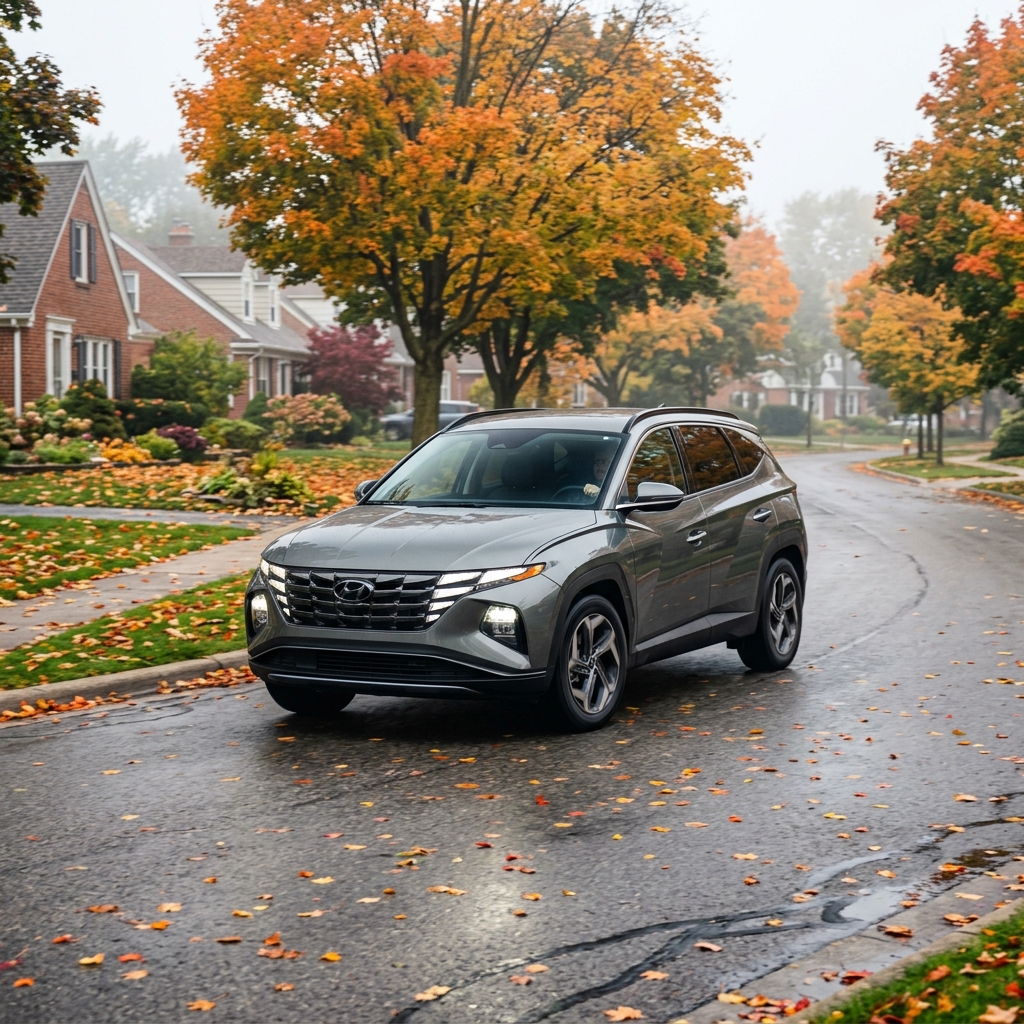
Preparing your vehicle for fall commuting requires testing battery electrical output, measuring brake pad thickness, verifying tire tread depth, topping off washer fluid, and replacing worn windshield wiper blades before early frost and wet autumn leaves affect stopping distances. Completing these essential service steps in late August or early September prevents sudden cold-weather component failures and keeps your daily drive reliable as school zones reopen and seasonal traffic increases.
The transition from summer to autumn brings unpredictable driving conditions across the Chicago area. Lower ambient temperatures cause tire pressure to drop, while fallen leaves on wet pavement create slick road surfaces that demand responsive vehicle systems. A thorough seasonal inspection focuses on key safety items:
- Testing the battery to ensure it can deliver required cold cranking amps when morning temperatures plunge.
- Checking brake pads and rotors to maintain sufficient friction material and prevent uneven wear or warping.
- Inspecting tire tread depth and setting tire pressure to recommended door-jamb specifications.
- Replacing cracked wiper blades and refilling windshield washer reservoir with low-freeze fluid.
- Testing all exterior turn signals, brake lights, and headlights for clear night and fog visibility.
Vehicles such as the 2026 Hyundai Tucson equipped with all-wheel drive and a SHIFTRONIC® transmission rely on proper tire traction and fluid health to balance power effectively across slippery pavement. Similarly, three-row family vehicles like the 2026 Hyundai Santa Fe require dependable braking and battery systems when hauling full passenger loads during back-to-school carpools. Ensuring these components receive scheduled maintenance before cold weather arrives maintains ride comfort and long-term vehicle health.
To prepare your Hyundai for seasonal driving, visit our service center location on Lincoln Avenue or call our team directly at (847) 582-3294. You can also review our dealership commitment to quality service and explore standard maintenance support through Hyundai Car Care maintenance support.
Table of Contents
- Can Fall Maintenance Prevent Winter Breakdowns on North Shore Roads?
- How Do You Test Battery Health and Inspect Brakes Before Cold Weather?
- Are All-Season Tires Sufficient for Fall and Winter Weather?
- What Emergency Equipment and Driving Habits Keep Fall Commutes Safe?
- What Is the Best Way to Estimate Actual Commute Times Around Lincolnwood?
- Frequently Asked Questions About Fall Service and Commute Preparation
Can Fall Maintenance Prevent Winter Breakdowns on North Shore Roads?
Fall maintenance prevents winter breakdowns by identifying failing batteries, thin brake pads, degraded engine oil, and low coolant levels before sub-freezing temperatures place maximum thermal stress on mechanical components. Addressing minor wear items during autumn eliminates up to 80 percent of unexpected cold-weather starting and traction failures before severe winter weather sets in.
During the autumn months, fluctuating daily temperatures accelerate wear on marginal vehicle parts. A battery that functions adequately in 70-degree summer weather may lose over 30 percent of its starting power when temperatures drop below freezing. Cold weather also thickens engine oil, making the starter motor work harder to turn the engine over during morning starts. Furthermore, damp fall conditions bring early morning fog and sudden rain, which make active wiper blades and clean headlight lenses critical for safety. Under Illinois motor vehicle regulations, drivers are required to turn on vehicle headlights whenever windshield wipers are in operation, making fall lighting and wiper inspections a mandatory safety priority.
Suburban school drop-offs and neighborhood driving in Lincolnwood require reliable braking and acceleration as pedestrian traffic increases near local parks and school zones. When drivers bring in a 2026 Hyundai Santa Fe or 2026 Hyundai Palisade for a pre-winter checkup, our service advisors often walk them through how a digital load test caught an aging battery before the first sub-zero morning stranded their family carpool.
Preventative fall maintenance also includes verifying engine coolant strength to prevent internal fluid freezing, checking heating and defrosting performance, and inspecting undercarriage components. Because heavy road salt is routinely applied across local roadways in winter, catching small underbody rust or boot tears during fall helps protect long-term mechanical reliability.
Drivers maintaining their vehicles can leverage the Hyundai complimentary maintenance program for covered factory services, check overall protection through factory Hyundai Assurance benefits, or connect with our advisors by reaching out to our service team.
How Do You Test Battery Health and Inspect Brakes Before Cold Weather?
Testing battery health involves measuring cold cranking amps and terminal voltage using a digital load tester, while a proper brake inspection verifies that friction pads retain at least 3 to 4 millimeters of wearable material. Both diagnostics ensure that your vehicle starts reliably on sub-freezing mornings and comes to a controlled stop on wet autumn pavement.
A professional battery test evaluates more than just static resting voltage. While a fully charged 12-volt battery shows approximately 12.6 volts at rest, a load tester applies a simulated starter draw to measure how well the internal lead plates sustain voltage under load. Cold weather slows the chemical reaction inside lead-acid and AGM batteries, reducing available starting energy right when cold engine oil demands higher electrical amperage. Testing battery health in late summer or early fall reveals internal resistance buildup and plate degradation before cold snaps leave you stranded.
Brake inspections require removing the wheels to measure pad thickness, evaluate rotor surface condition, and inspect hydraulic lines:
- Measuring outer and inner brake pad friction material to verify at least 3 millimeters of operational pad remaining.
- Inspecting brake rotor surfaces for heat scoring, deep grooving, or excessive rust ridge formation.
- Testing brake fluid for moisture contamination, as fluid absorbing over 3 percent water lowers boiling points and promotes internal line corrosion.
- Checking caliper slide pins and rubber dust boots to prevent uneven pad dragging or sticking.
Modern driver-assist suites—such as Forward Collision-Avoidance Assist available on the 2026 Hyundai Tucson—rely on responsive mechanical brakes to execute emergency stopping maneuvers accurately. Keeping hydraulic fluid clean and brake pads well within manufacturer wear specifications guarantees that factory safety technology performs as engineered when wet leaves or sudden stops reduce available traction.
Owners looking for seasonal care can review current Hyundai service specials to plan maintenance visits or utilize Hyundai Bluelink+ remote start and diagnostic features to check battery status and vehicle health alerts directly from a smartphone app.
Are All-Season Tires Sufficient for Fall and Winter Weather?
All-season tires provide adequate grip during mild autumn temperatures and wet rainfall, but dedicated winter tires offer superior traction once ambient temperatures consistently drop below 45 degrees Fahrenheit. Standard all-season rubber compounds begin to harden in cold weather, which lengthens stopping distances on frost, slush, and packed snow.
Tire rubber compound engineering determines how a tire behaves across changing temperatures. All-season tires use a versatile rubber compound designed to endure summer heat while providing acceptable tread life. However, when ambient air drops below 45 degrees, that tread compound stiffens, losing its ability to conform to small road surface irregularities. Dedicated winter tires utilize specialized silica-rich compounds that remain soft and pliable in sub-freezing weather, combined with deep tread siping that bites into snow and ice.
Autumn wet leaves present an understated driving hazard. Accumulations of damp leaves on roadway surfaces create a low-friction layer comparable to driving on wet ice. Maintaining deep tread depth is essential for evacuating water and leaf debris from beneath the tire contact patch:
- Tire tread depth above 4/32 inches is required for effective hydroplaning resistance in heavy autumn rain.
- Cold ambient air reduces tire inflation pressure by approximately 1 PSI for every 10-degree drop in outside temperature.
- Underinflated tires experience uneven shoulder wear, decreased fuel economy, and compromised steering response.
Stop-and-go urban driving along commercial corridors like Devon Avenue in West Ridge highlights the need for adequate tire tread, as slick leaves accumulate at heavily trafficked intersections. Vehicles equipped with active torque distribution—such as the 2026 Hyundai Tucson featuring an available 1.6L engine and all-wheel drive—depend on quality tire tread to translate engine power into stable directional control.
Local drivers seeking factory tire inspections and seasonal tire swaps can visit our Chicago area Hyundai dealership to verify tread depth, correct inflation pressures, and select appropriate tire options for Midwest weather.
What Emergency Equipment and Driving Habits Keep Fall Commutes Safe?
A complete autumn emergency trunk kit must contain jumper cables, a portable tire inflator, an ice scraper, a high-lumen flashlight, a heavy blanket, a first aid kit, and non-perishable snacks. Pairing this emergency equipment with cautious driving habits—such as increasing follow distances and obeying school zone speed restrictions—ensures maximum safety during unpredictable fall commutes.
Seasonal changes bring specific driving challenges across the region. Decreasing daylight hours mean morning and evening commutes occur in low-light or twilight conditions. Sun glare during sunrise and sunset can temporarily blind drivers along east-west arterial roads, while autumn also marks peak movement for local deer populations during early morning and dusk hours.
Adopting protective driving habits reduces risk during back-to-school season:
- Maintaining a minimum 4-second follow distance on wet or leaf-covered pavement to account for increased stopping distances.
- Obeying all posted school zone speed limits and stopping completely for flashing red lights on school buses.
- Keeping windshield surfaces clean inside and out to minimize blinding glare from low autumn sun angles.
- Avoiding sudden steering or heavy braking inputs when traveling over damp leaf piles or bridge decks prone to early frosting.
For unexpected roadside emergencies, Hyundai provides comprehensive manufacturer-backed emergency support. Every new Hyundai owner receives 24/7 coverage, including towing, battery jump-starts, flat tire changes, and fuel delivery. If you experience an emergency on the road, contact Hyundai Roadside Assistance at (800) 243-7766 for prompt, factory-authorized service.
Planning ahead with routine maintenance helps avoid roadside trouble altogether. Drivers preparing for fall travel can start by getting directions to our service center to have their vehicle inspected by factory-trained technicians.
What Is the Best Way to Estimate Actual Commute Times Around Lincolnwood?
The most accurate way to estimate actual commute times to work or school is to monitor live, route-specific navigation apps during peak traffic windows between 7:00 AM and 9:00 AM or 4:00 PM and 7:00 PM. Factoring in regional congestion trends, seasonal construction lane closures, and lake-effect rainfall allows drivers to adjust departure times by 15 to 30 minutes to bypass the heaviest delays.
Regional traffic studies indicate that drivers across the Chicago metropolitan area lose an average of 112 hours annually to traffic congestion, with average last-mile travel speeds dropping to roughly 9 mph during peak corridor slowdowns. Arterial routes and major expressways experience severe surges as school schedules resume in late August. Major thoroughfares such as I-90/94 (Kennedy Expressway) face heavy morning inbound and evening outbound traffic that can ripple onto surrounding residential streets.
To manage daily travel times efficiently, incorporate these route planning strategies:
- Check traffic mapping applications 10 to 15 minutes before leaving to spot sudden accident delays or construction backups.
- Shift departure times slightly ahead of the 7:30 AM or 5:15 PM peak congestion spikes to save meaningful transit time.
- Identify secondary surface-street alternatives for primary commute corridors in case expressway traffic comes to a complete standstill.
- Allow extra travel time during rainy conditions or early autumn cold snaps when damp roads slow traffic flow across major intersections.
Maintaining a smooth, efficient commute also depends on vehicle reliability. A vehicle running with optimal tire pressure, clean engine air filters, and fresh oil operates more efficiently during stop-and-go idling. For questions regarding maintenance schedules that support heavy commuter driving, consider contacting our Hyundai service department to speak with a technical advisor.
Frequently Asked Questions About Fall Service and Commute Preparation
Q: How long does a full fall vehicle safety inspection take?
A comprehensive multi-point vehicle inspection typically takes between 45 minutes and 1.5 hours at a certified service facility. During this inspection, factory-trained technicians evaluate battery health, measure brake pad thickness, check tire tread and pressure, inspect suspension components, test exterior lighting, verify belt and hose integrity, and check all fluid levels. Scheduling an appointment in advance helps ensure prompt service while you wait.
Q: When is the best time to schedule fall car maintenance?
The ideal time to schedule fall vehicle service is late August through mid-September. Completing maintenance during this window ensures your car is fully prepared before school zone traffic reaches peak volume and early Midwest frost arrives. Addressing fluid changes, wiper replacements, and battery checks before seasonal cold snaps occur prevents unexpected morning starting failures and maintains clear visibility during wet autumn weather.
Q: Does cold autumn weather affect electric vehicle range?
Cold weather reduces electric vehicle operating efficiency, with sub-freezing temperatures resulting in a range reduction between 15 percent and 30 percent depending on cabin heater usage and ambient air conditions. To maximize real-world range during fall and winter, drivers should utilize preconditioning features while the vehicle is plugged into a charger, park in an enclosed garage when available, and utilize heated seats rather than full cabin climate heating when driving short distances.
Q: What is the minimum recommended brake pad thickness for winter driving?
While the absolute legal minimum for brake pad friction material is often 1.6 millimeters, automotive safety standards recommend replacing brake pads once they reach 3 to 4 millimeters of thickness. Entering winter with at least 4 millimeters of friction material ensures sufficient pad life and thermal dissipation to handle wet, icy pavement and stop-and-go commuter traffic without risking metal-to-metal rotor damage.
Q: Why do my vehicle tires lose air pressure during the fall season?
Tires naturally lose air pressure in autumn because ambient air density changes with falling temperatures. For every 10-degree Fahrenheit drop in outside temperature, tire inflation pressure decreases by approximately 1 PSI. Because autumn temperatures drop significantly between afternoon highs and early morning lows, checking tire pressure monthly with an accurate gauge ensures tires remain properly inflated to manufacturer specifications listed on the driver door jamb.
Preparing your car for the fall commuting season is the single best way to ensure reliable daily transportation and protect your family on the road. From battery load testing and brake pad inspections to tire tread depth evaluations and wiper blade replacements, proactive care prevents costly cold-weather breakdowns.
Our factory-certified technicians at Berman Hyundai are ready to help you prepare for back-to-school driving and seasonal weather shifts. Visit our convenient location at 6747 Lincoln Ave in Lincolnwood, or give our team a quick call at (847) 582-3294. You can easily schedule service online with our Hyundai technicians or learn more about manufacturer coverage including Hyundai Roadside Assistance coverage today.