Modern vehicles are highly sophisticated machines, but keeping them running reliably does not have to be a mystery. Routine maintenance is simply a series of proactive, planned checks and parts replacements designed to prevent major mechanical failures before they start. When you stay on top of these basic services, you protect your vehicle's safety, maximize fuel economy, and preserve its long-term value.
At Berman Hyundai, we believe that understanding your vehicle's maintenance needs should be straightforward and stress-free. Every new model in our lineup benefits from manufacturer-backed programs designed to take the guesswork out of ownership. For example, you can learn about complimentary maintenance plans that cover factory-scheduled factory oil changes, tire rotations, and multi-point inspections for the first 3 years or 36,000 miles, whichever comes first. This level of protection is part of our commitment to keeping your vehicle in peak condition.
To help you stay ahead of potential issues, our certified technicians utilize specialized diagnostic tools to perform comprehensive health checks during every visit. You can learn about car care programs that streamline your service experience with transparent, digital multi-point inspection reports sent directly to your phone. We also stand behind the quality of our work and the vehicles we care for, which is why we invite you to learn about our perfect car promise for an added layer of reassurance.
Whether you need a quick diagnostic check or are following your factory-recommended schedule, our professional team is ready to assist. If you have questions about an upcoming service interval, you can reach our service department directly by giving us (847) 582-3294 a quick call. For those ready to bring their vehicle in, finding us is simple; you can easily get directions to Berman Hyundai to plan your next visit.
Table of Contents
- How Do You Know If Your Vehicle Needs a Wheel Alignment?
- What is Included in a Standard Car Tire Rotation and Balancing Service?
- How Does a Standard Vehicle Brake Pad Replacement Keep You Safe?
- Understanding Filters: How a Cabin Air Filter Differs from an Engine Air Filter
- The True Value of Motor Oil: Why Synthetic Oil Costs More Than Conventional Oil
- How Long Do Car Batteries Typically Last and When Should You Replace Them?
- Frequently Asked Questions About Common Hyundai Services
- Verifying Auto Shop Reputation and Scheduling Your Service
How Do You Know If Your Vehicle Needs a Wheel Alignment?
A wheel alignment is not an adjustment of the wheels themselves, but rather a calibration of the vehicle's suspension components. Over time, hitting potholes, bumping curbs, or driving on uneven road surfaces can jar your suspension out of its precise, factory-set angles. When this happens, your tires no longer contact the road at the optimal angle, which can quickly degrade your vehicle's handling and ruin your tires.
There are several clear physical warning signs that indicate your vehicle is overdue for an alignment. The most common symptom is a distinct pull to one side while driving on a flat, straight road, requiring constant steering correction to stay centered. You might also notice that your steering wheel remains crooked or off-center even when you are driving in a straight line. Another critical indicator is uneven or rapid tire wear, particularly along the inside or outside edges of the tread, which can significantly shorten the lifespan of a tire set within a few thousand miles.
During a professional alignment service, technicians measure and adjust three primary suspension angles:
- Camber: The inward or outward tilt of the tire when viewed directly from the front of the vehicle.
- Toe: The direction the tires point relative to the vehicle's centerline when viewed from directly above, resembling being pigeon-toed or duck-toed.
- Caster: The angle of the steering axis when viewed from the side, which directly influences steering balance, stability, and cornering effort.
If you are experiencing any steering drift or uneven tire wear during your daily driving in Lincolnwood, it is wise to have your suspension inspected. Neglecting these symptoms can lead to premature tire replacement costs and reduced handling precision. To have our certified technicians inspect your suspension system, you can access our dealership directions online to find the most convenient route to our service department.
What is Included in a Standard Car Tire Rotation and Balancing Service?
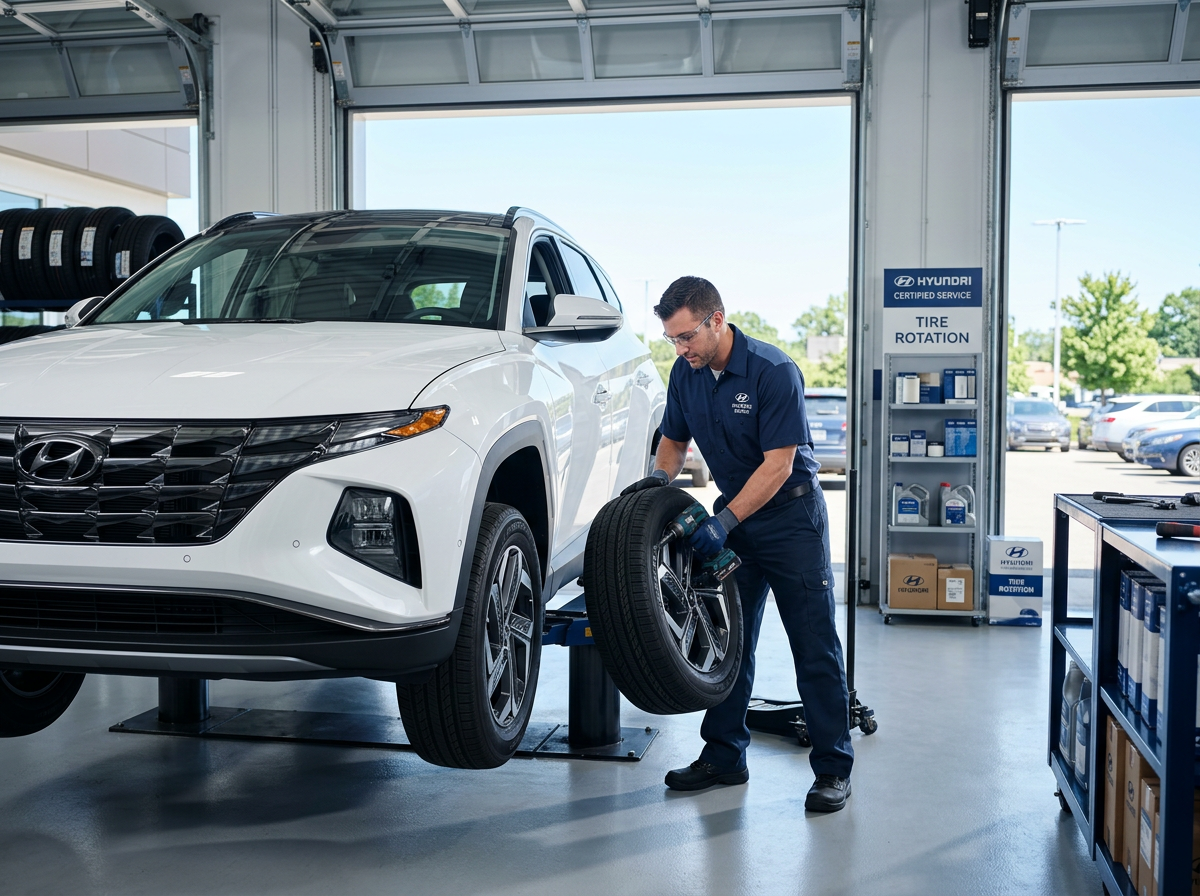
Tires do not wear down evenly on their own because the front and rear axles experience completely different physical forces. On front-wheel-drive vehicles, the front tires handle the majority of steering, braking, and power delivery, which causes them to wear out much faster than the rear tires. A standard tire rotation is the process of systematically moving tires from one position on the vehicle to another to ensure even tread wear across all four tires over time.
A standard tire rotation service involves several critical steps to maximize tire longevity:
- Position Swapping: Moving the front tires to the rear and the rear tires to the front, often crossing them diagonally depending on whether the vehicle is front-wheel drive, all-wheel drive, or uses directional tread patterns.
- Tread Depth Inspection: Measuring the remaining tread on all four tires to monitor wear rates and identify potential alignment or suspension issues.
- Pressure Calibration: Adjusting the air pressure in every tire to match the manufacturer's exact specifications, which often differ between the front and rear axles.
- Wheel Balancing: Spinning each wheel assembly on a specialized machine to detect heavy spots, then applying small, precise clip-on or adhesive weights to ensure the wheel spins smoothly without causing vibrations.
Regularly scheduling this service every 5,000 to 7,500 miles helps maintain consistent traction, improves fuel economy, and preserves your tire warranty coverage. To keep your ride smooth and safe, you can explore our certified service center options online. If you want to discuss your tire wear patterns or check for available service openings, please feel free to contact our service team directly for personalized assistance.
How Does a Standard Vehicle Brake Pad Replacement Keep You Safe?
Your vehicle's braking system relies on friction to convert kinetic energy into heat, allowing you to slow down or stop safely. The primary wear component in this system is the brake pad, which is pressed against a spinning steel disc called a rotor when you press the brake pedal. Because the friction material on the brake pads is designed to wear away gradually over time, replacing these pads before they are completely depleted is essential to prevent metal-on-metal damage and maintain stopping power.
A standard brake pad replacement involves removing the worn friction pads from the brake calipers and installing a brand-new set of high-quality pads. During this process, technicians also perform a thorough inspection of the entire braking system, including the calipers, slide pins, and brake fluid lines. They will measure the thickness of the brake rotors to determine if they are still within safe operational limits; if the rotors are warped or deeply grooved, they must be resurfaced or replaced alongside the new pads to ensure smooth, quiet stopping.
Ignoring worn brake pads can lead to extended stopping distances and costly damage to your rotors and calipers. Common warning signs of worn pads include a high-pitched squealing or squeaking noise when braking, a spongy feel when pressing the pedal, or a harsh grinding sensation that indicates the friction material is completely gone. If you notice any of these symptoms while navigating the dense stop-and-go traffic corridors of West Ridge, it is vital to address them immediately. You can easily get in touch with our service advisors to describe what you are hearing and schedule a professional brake inspection.
Understanding Filters: How a Cabin Air Filter Differs from an Engine Air Filter
Vehicles utilize multiple filtration systems to keep both the mechanical components and the passengers protected from airborne contaminants. Two of the most frequently replaced filters are the cabin air filter and the engine air filter. While they perform similar filtration tasks, they serve completely different purposes and operate in entirely separate areas of your vehicle.
The cabin air filter is responsible for cleaning the air that enters the passenger compartment through the heating, ventilation, and air conditioning system. It traps dust, pollen, soot, mold spores, and other airborne allergens before they can reach your lungs, ensuring a clean and comfortable cabin environment. Conversely, the engine air filter is located under the hood and cleans the air entering the engine's combustion chambers. It prevents abrasive dirt, sand, and debris from entering the engine cylinders, where they could cause severe internal wear and degrade engine performance.
| Feature / Detail | Cabin Air Filter | Engine Air Filter |
|---|---|---|
| Primary Purpose | Cleans air inside the passenger cabin | Cleans air entering the engine |
| Typical Location | Behind the glovebox or under the dash | Inside an airbox under the hood |
| Signs of Wear | Weak HVAC airflow, musty cabin odors | Reduced fuel efficiency, engine misfires |
| Replacement Interval | Every 15,000 to 30,000 miles | Every 15,000 to 30,000 miles |
Maintaining clean filters is a simple way to protect your health and your engine's longevity. For drivers who utilize advanced vehicle connectivity features, keeping your vehicle's cabin environment clean complements the overall modern driving experience. You can explore modern connectivity features online to see how digital vehicle management systems help you track service intervals and filter replacement schedules automatically.
The True Value of Motor Oil: Why Synthetic Oil Costs More Than Conventional Oil
Motor oil is the lifeblood of your engine, providing lubrication to moving parts, reducing friction, and helping to dissipate extreme heat. When choosing motor oil, drivers are typically faced with a choice between conventional and synthetic options. While synthetic oil carries a higher upfront cost, its chemical composition and manufacturing process provide superior protection that justifies the initial expense.
Conventional oil is refined directly from crude oil, meaning its molecular structure contains natural impurities and varying molecule sizes. Synthetic oil, on the other hand, undergoes a highly complex chemical synthesis and purification process. This engineering results in highly uniform molecules that are tailored to meet the demanding tolerances of modern engines.
The benefits of synthetic oil include:
- Superior Temperature Resistance: Synthetic oil maintains its viscosity and flows easily in extreme cold, while resisting breakdown and sludge formation under intense engine heat.
- Longer Service Lifespan: Because synthetic oil resists chemical breakdown and oxidation far better than conventional oil, it typically allows for longer intervals between oil changes, often up to 7,500 or 10,000 miles.
- Enhanced Engine Protection: The uniform molecular structure minimizes friction, reduces internal wear, and keeps critical engine components cleaner over time.
While conventional oil may seem like a budget-friendly option, the extended intervals and superior protection of synthetic oil offer greater long-term value. Using the correct oil viscosity and type specified in your owner's manual is essential to maintaining your vehicle's warranty and ensuring peak engine efficiency.
How Long Do Car Batteries Typically Last and When Should You Replace Them?
Your vehicle's battery is the heart of its electrical system, providing the sudden surge of electrical power required to start the engine and stabilizing the voltage to keep advanced safety features and infotainment systems running smoothly. On average, a standard car battery has a reliable lifespan of 3 to 5 years. However, this lifespan can vary significantly based on local climate conditions, your driving habits, and the overall electrical demand of your vehicle.
Extreme temperatures are the primary enemy of battery longevity. While extreme winter cold makes it harder for a battery to deliver cranking power, summer heat is actually what causes the most damage by accelerating internal chemical corrosion and evaporating the battery's internal liquid electrolyte. Additionally, frequent short trips that do not allow the alternator enough time to fully recharge the battery can lead to premature battery degradation.
To avoid the inconvenience of an unexpected dead battery, it is helpful to recognize the early warning signs of a failing battery:
- Slow Engine Crank: The engine takes longer than usual to turn over or make a starting sound when you turn the key or press the start button.
- Dimming Lights: Headlights or interior cabin lights appear noticeably dimmer when the engine is idling compared to when you are driving.
- Battery Warning Light: The dashboard battery alert symbol remains illuminated while the vehicle is running.
- Physical Swelling: The plastic battery case appears bloated or swollen, which is typically caused by extreme heat or overcharging.
During every multi-point inspection, technicians use a specialized handheld battery tester to measure the battery's cold cranking amps and overall state of charge. This diagnostic test can identify a weak battery before it leaves you stranded, allowing you to replace it proactively.
Frequently Asked Questions About Common Hyundai Services
Hyundai vehicles come with specific maintenance schedules that optimize performance and longevity. Below are answers to some of the most common questions our service team receives regarding routine automotive maintenance.
Q: What is the difference between the powertrain warranty and the bumper-to-bumper warranty?
The bumper-to-bumper warranty covers almost all electronic and mechanical components of your vehicle against manufacturing defects, excluding wear items like wiper blades or brake pads. The powertrain warranty specifically covers the heavy-duty components that move the vehicle, such as the engine, transmission, and drive axles, typically for a much longer duration. You can explore the comprehensive warranty program details online to see how our industry-leading coverage keeps you protected.
Q: How do I know if my vehicle qualifies for special service promotions or maintenance offers?
We regularly offer seasonal maintenance specials and parts discounts to help keep your vehicle care affordable. You can easily view current service incentives on our website to find active offers on oil changes, tire services, and battery replacements before scheduling your next appointment.
Q: What should I do if my vehicle breaks down or won't start while I am away from home?
If you experience a roadside emergency or a dead battery, you do not have to worry about finding a third-party towing service. You can learn about roadside assistance programs that offer 24/7 emergency towing, flat tire changes, and battery jump-starts directly to an authorized service center.
Q: Where can I find a trusted, certified service department in the local area?
For professional maintenance performed by factory-trained technicians using genuine OEM parts, you can visit our authorized service center located conveniently nearby. Our team is fully equipped to handle everything from routine fluid changes to advanced diagnostic repairs.
Verifying Auto Shop Reputation and Scheduling Your Service
When it comes to maintaining your vehicle, choosing a service center with a proven reputation for honesty, expertise, and quality is paramount. You can easily verify the reputation of an auto shop by checking online reviews, verifying their standing with the Better Business Bureau, and asking neighbors for personal recommendations. Working with a factory-authorized service center ensures that your vehicle is cared for by factory-trained technicians who use specialized diagnostic equipment and genuine OEM parts designed specifically for your model.
At Berman Hyundai, we pride ourselves on delivering transparent, high-quality service to drivers throughout Skokie and the surrounding communities. Whether you are coming in for a routine tire rotation or need a detailed diagnostic check, our friendly team is dedicated to keeping your vehicle running like new.
We make coordinating your vehicle's care as convenient as possible. If you would like to speak with a service advisor or ask a question about a specific maintenance interval, please call our service department at (847) 582-3294. When you are ready to drop off your vehicle, you can get directions to our service center located at 6747 Lincoln Ave, Lincolnwood, IL 60712. We look forward to helping you drive with complete confidence.